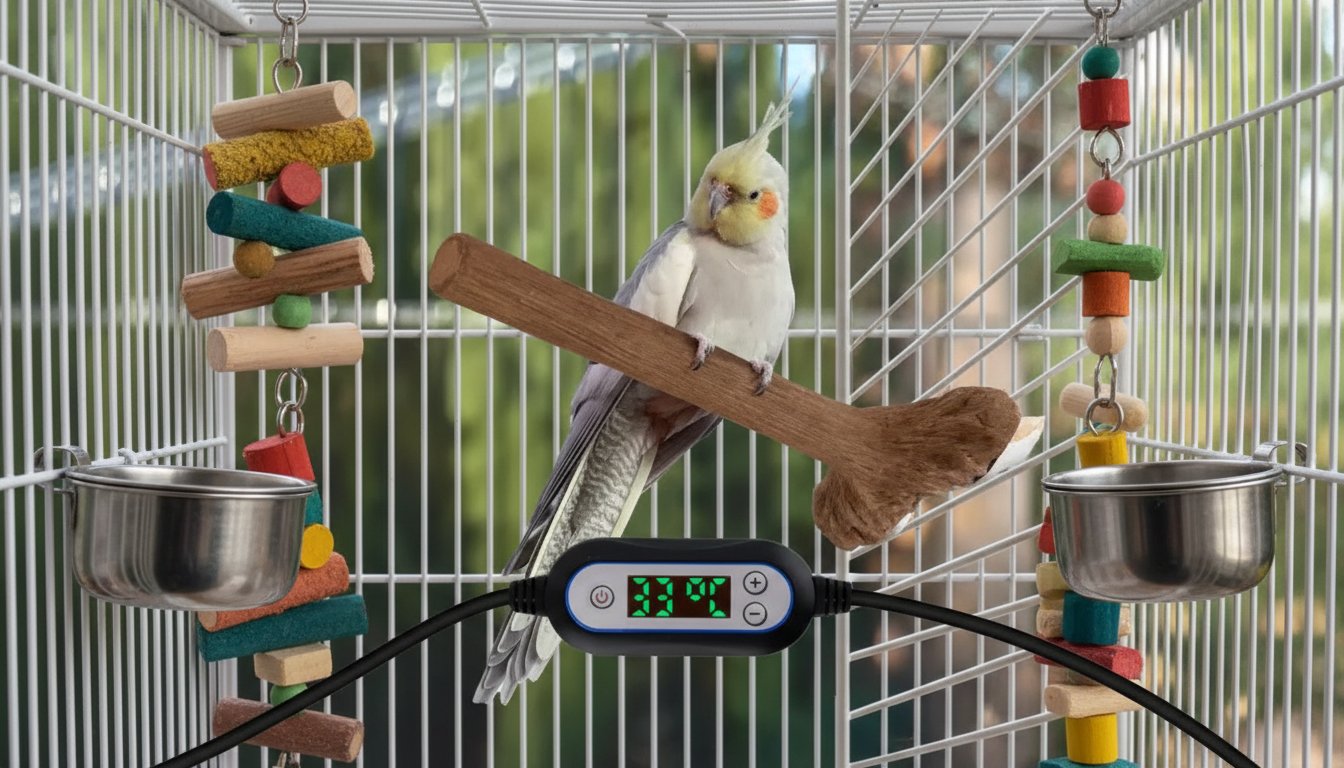
A heated perch can help birds stay comfortable during cooler seasons, drafts, or recovery periods—without turning the whole room into a sauna. A warmed, stable perch gives your bird a predictable “cozy spot” to rest, nap, or warm up after a bath while still letting them move freely around the cage. Below is a practical guide to what a heated perch stand does, what the anti-bite tube adds, where it fits best in your setup, and how to use it safely day to day. For more guidance, see Avian toxicoses: a review – PMC – NIH.
A heated perch stand provides a gently warm surface under your bird’s feet and lower body during rest. That can be especially helpful in cooler rooms, homes with overnight temperature drops, or cages placed near windows where drafts can sneak in. For further reading, see Guidelines to the Use of Wild Birds in ….
Temperature matters: the perch should feel gently warm to the touch—not hot. Overheating can be dangerous, so it’s smart to keep an eye out for signs of heat stress and avoid over-warming the cage environment (see ASPCA guidance on overheating risks: Heat stroke and overheating).
Many birds explore with their beaks. That curiosity is part of what makes them fun, but it can be hard on cords. An anti-bite tube is designed to reduce exposure of the power cord in the areas your bird can reach.
If your bird is a determined shredder, treat cord safety like a system: minimize reachable cord length, offer enrichment to reduce boredom-chewing, and inspect daily.
Placement is the difference between a perch your bird uses naturally and one they ignore—or one that creates avoidable mess or risk.
For a warmed perching option with cord protection, consider the Heated Bird Perch Stand with Anti-Bite Tube, designed to provide a cozy resting spot while helping protect the most reachable section of the cord.
If you ever suspect your bird is too cold (especially in emergencies), it helps to understand risk factors and when to seek care; the Merck Veterinary Manual overview is a useful reference: Hypothermia (overview and risk factors).
| Setup step | Goal | What to look for |
|---|---|---|
| Mount perch securely | Stable resting spot | No wobble; bird can step on/off easily |
| Route cord with tube where reachable | Reduce chewing risk | Tube intact; cord quickly exits cage area |
| Keep a non-heated perch nearby | Allow self-selection | Bird alternates naturally without distress |
| Daily quick inspection | Prevent failures | No tooth marks, cracks, frays, or loose fittings |
The Heated Bird Perch Stand with Anti-Bite Tube is designed as a warmed perching option you can offer during cooler periods, nighttime roosting, or post-bath warm-up. The anti-bite tube is meant to help protect the cord section most likely to be reached by curious chewers.
It pairs well with comfort basics that don’t rely on extra heat: reducing drafts, maintaining a consistent light cycle, and setting up a quiet sleeping area. If you’re also organizing feeding stations and prefer a stable, easy-to-clean option on a nearby surface, you may like the Cartoon Owl Anti-Slip Pet Bowl – Large Capacity for Cats & Dogs or the Cartoon Cat & Dog Bowl with Strawberry Design for holding fresh produce prep or pellet portions outside the cage during cleanup.
Many owners use warmed perches during sleep hours, but safety depends on correct installation, stable mounting, routine cord/tube inspection, and following the manufacturer’s guidance. Keeping a non-heated perch available helps your bird self-regulate.
Many birds approach cautiously at first, then use it more as they realize it’s simply a warm resting spot; others hop on right away. Introduce it with supervision and confirm the perch feels gently warm rather than hot.
Reroute the cord so even the tube is less reachable, add additional external cord protection outside the cage if needed, and increase enrichment to reduce boredom chewing. If you see damage or exposed material, discontinue use until it’s repaired or replaced.










Leave a comment